
Subjunctive Chart
Subjunctive Chart - For all verbs except the past tense of ‘be’. Learn to use the subjunctive in english with examples and tips. The english subjunctive is a special verb form that expresses something desired or imagined. It’s used to talk about wishes, hypothetical situations, or actions that haven’t happened yet. The subjunctive mood expresses wishes, proposals, suggestions, or imagined situations. Wants to happen or anticipates. The subjunctive mood is the verb form used to explore a hypothetical situation (e.g., if i were you) or to express a wish, a demand, or a suggestion (e.g., i demand he be present). The subjunctive (also known as the conjunctive in some languages) is a grammatical mood, a feature of an utterance that indicates the speaker's attitude toward it. The subjunctive mood is a form of a verb used to express statements that are imagined or contrary to the fact (if i were a millionaire, i would buy my parents a house). It's usually found in a sentence with two clauses, with one clause having a verb like wish, suggest,. The subjunctive is a special kind of verb form in english. Learn to use the subjunctive in english with examples and tips. The subjunctive is a verb mood used to express wishes, hypotheticals, or unreal actions. It’s used to talk about wishes, hypothetical situations, or actions that haven’t happened yet. The word subjunctive comes from. The subjunctive is a verb form in english that is relatively rare, but is structurally very simple. The subjunctive mood is a form of a verb used to express statements that are imagined or contrary to the fact (if i were a millionaire, i would buy my parents a house). The subjunctive (also known as the conjunctive in some languages) is a grammatical mood, a feature of an utterance that indicates the speaker's attitude toward it. It is a special kind of present tense; For all verbs except the past tense of ‘be’. It's usually found in a sentence with two clauses, with one clause having a verb like wish, suggest,. Learn to use the subjunctive in english with examples and tips. Wants to happen or anticipates. The subjunctive mood expresses wishes, proposals, suggestions, or imagined situations. The subjunctive mood is a form of a verb used to express statements that are imagined. Wants to happen or anticipates. The subjunctive mood is a verb form used to refer to a hypothetical scenario or to express a wish, suggestion, or command (e.g., “i suggest you be quiet”). For all verbs except the past tense of ‘be’. It's usually found in a sentence with two clauses, with one clause having a verb like wish, suggest,.. It’s used to talk about wishes, hypothetical situations, or actions that haven’t happened yet. The subjunctive mood expresses wishes, proposals, suggestions, or imagined situations. It's usually found in a sentence with two clauses, with one clause having a verb like wish, suggest,. The subjunctive mood is a form of a verb used to express statements that are imagined or contrary. The subjunctive mood is a verb form used to refer to a hypothetical scenario or to express a wish, suggestion, or command (e.g., “i suggest you be quiet”). For all verbs except the past tense of ‘be’. The subjunctive is a verb form in english that is relatively rare, but is structurally very simple. The word subjunctive comes from. It's. The subjunctive mood is a verb form used to refer to a hypothetical scenario or to express a wish, suggestion, or command (e.g., “i suggest you be quiet”). The subjunctive is a verb form in english that is relatively rare, but is structurally very simple. Wants to happen or anticipates. For all verbs except the past tense of ‘be’. The. The subjunctive mood expresses wishes, proposals, suggestions, or imagined situations. It's usually found in a sentence with two clauses, with one clause having a verb like wish, suggest,. The subjunctive is a verb mood used to express wishes, hypotheticals, or unreal actions. We use the subjunctive when talking about events that somebody: The subjunctive is a verb form in english. The subjunctive is a special kind of verb form in english. The subjunctive mood is the verb form used to explore a hypothetical situation (e.g., if i were you) or to express a wish, a demand, or a suggestion (e.g., i demand he be present). We use the subjunctive when talking about events that somebody: It's usually found in a. The subjunctive is a verb mood used to express wishes, hypotheticals, or unreal actions. The subjunctive mood is a form of a verb used to express statements that are imagined or contrary to the fact (if i were a millionaire, i would buy my parents a house). The word subjunctive comes from. It is a special kind of present tense;. The subjunctive is a special kind of verb form in english. The subjunctive is a verb mood used to express wishes, hypotheticals, or unreal actions. The subjunctive mood is the verb form used to explore a hypothetical situation (e.g., if i were you) or to express a wish, a demand, or a suggestion (e.g., i demand he be present). Learn. It’s used to talk about wishes, hypothetical situations, or actions that haven’t happened yet. It is a special kind of present tense; The subjunctive is a verb mood used to express wishes, hypotheticals, or unreal actions. It's usually found in a sentence with two clauses, with one clause having a verb like wish, suggest,. Learn to use the subjunctive in. The subjunctive is a verb form in english that is relatively rare, but is structurally very simple. The subjunctive mood is the verb form used to explore a hypothetical situation (e.g., if i were you) or to express a wish, a demand, or a suggestion (e.g., i demand he be present). It’s used to talk about wishes, hypothetical situations, or actions that haven’t happened yet. Wants to happen or anticipates. The subjunctive is a verb mood used to express wishes, hypotheticals, or unreal actions. In english grammar, the subjunctive mood represents a verb expressing wishes, stipulating demands, or making statements contrary to fact. It is a special kind of present tense; Learn to use the subjunctive in english with examples and tips. It's usually found in a sentence with two clauses, with one clause having a verb like wish, suggest,. The subjunctive (also known as the conjunctive in some languages) is a grammatical mood, a feature of an utterance that indicates the speaker's attitude toward it. The english subjunctive is a special verb form that expresses something desired or imagined. The word subjunctive comes from. We use the subjunctive when talking about events that somebody: For all verbs except the past tense of ‘be’.
Spanish Present Tense Conjugation Chart Uno
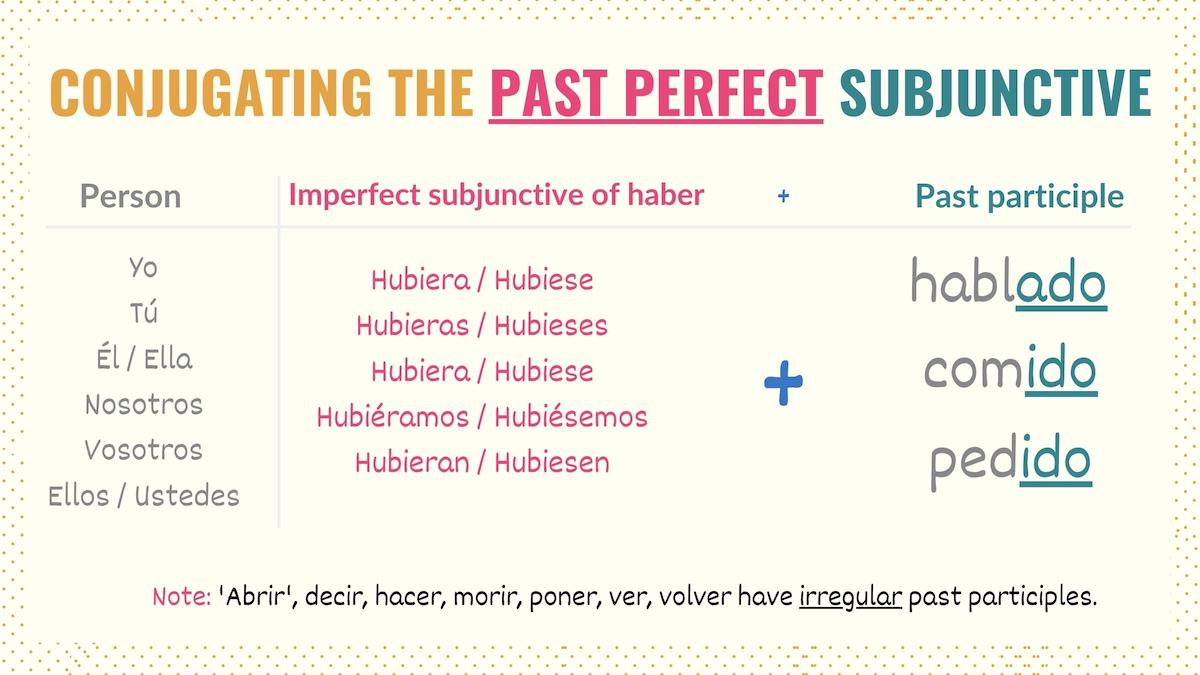
Past Perfect Subjunctive Spanish Guide Conjugations & Uses
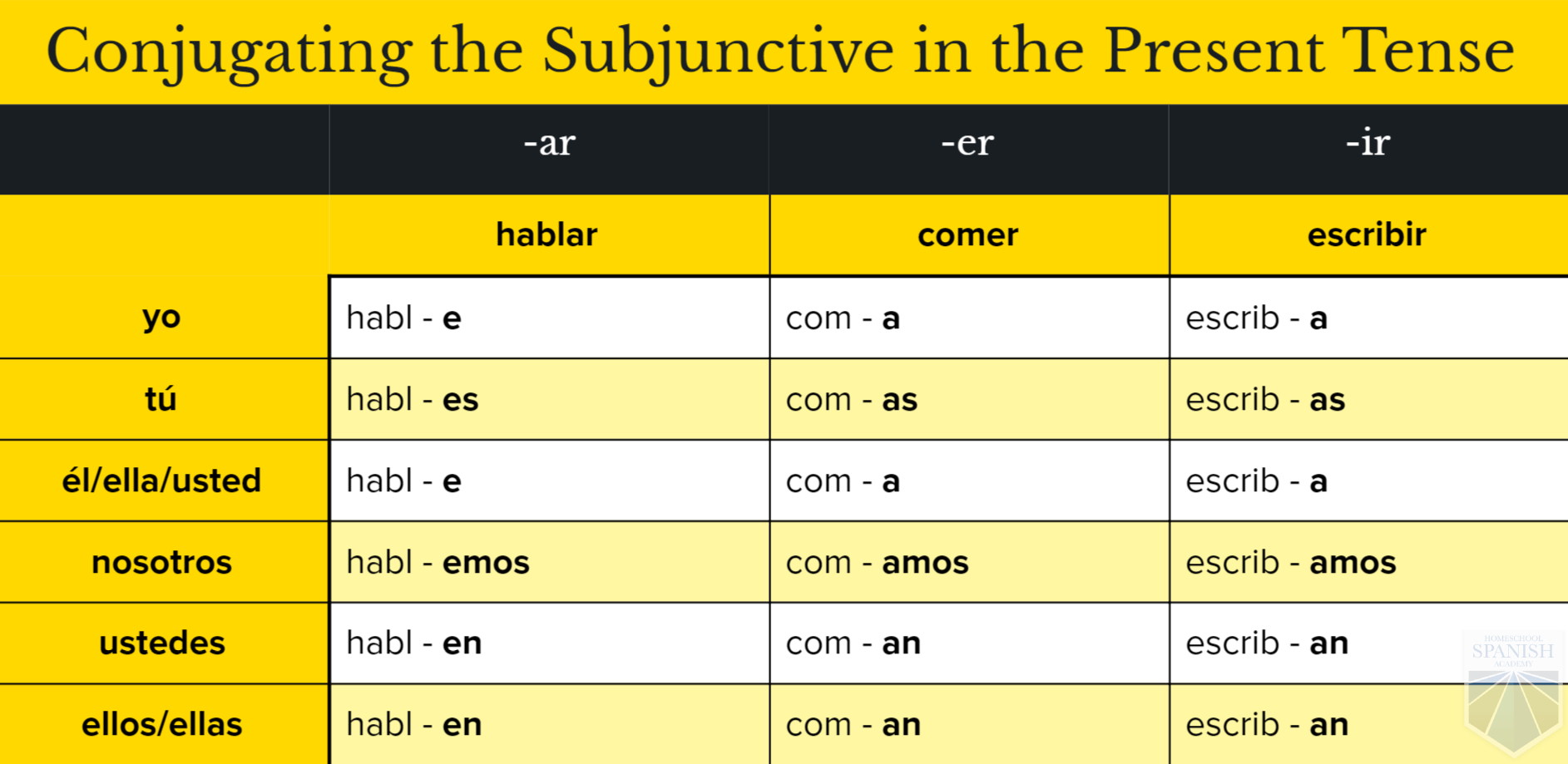
Spanish Subjunctive, Part 2 Present Tense
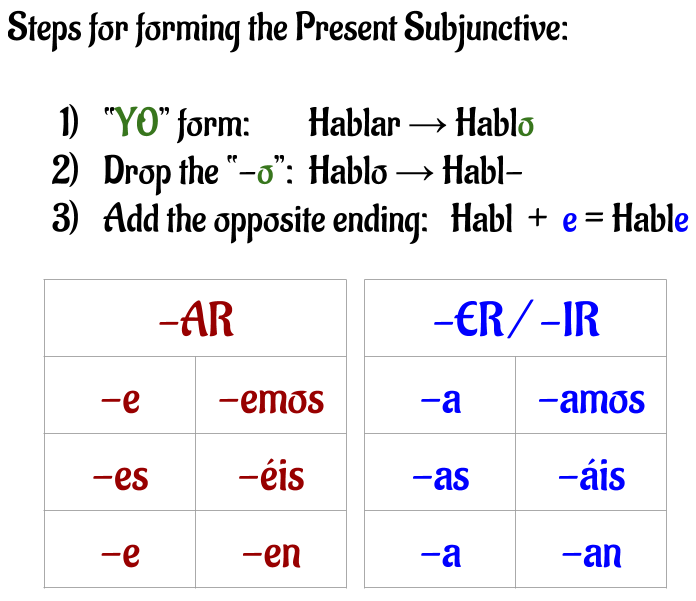
El Subjuntivo
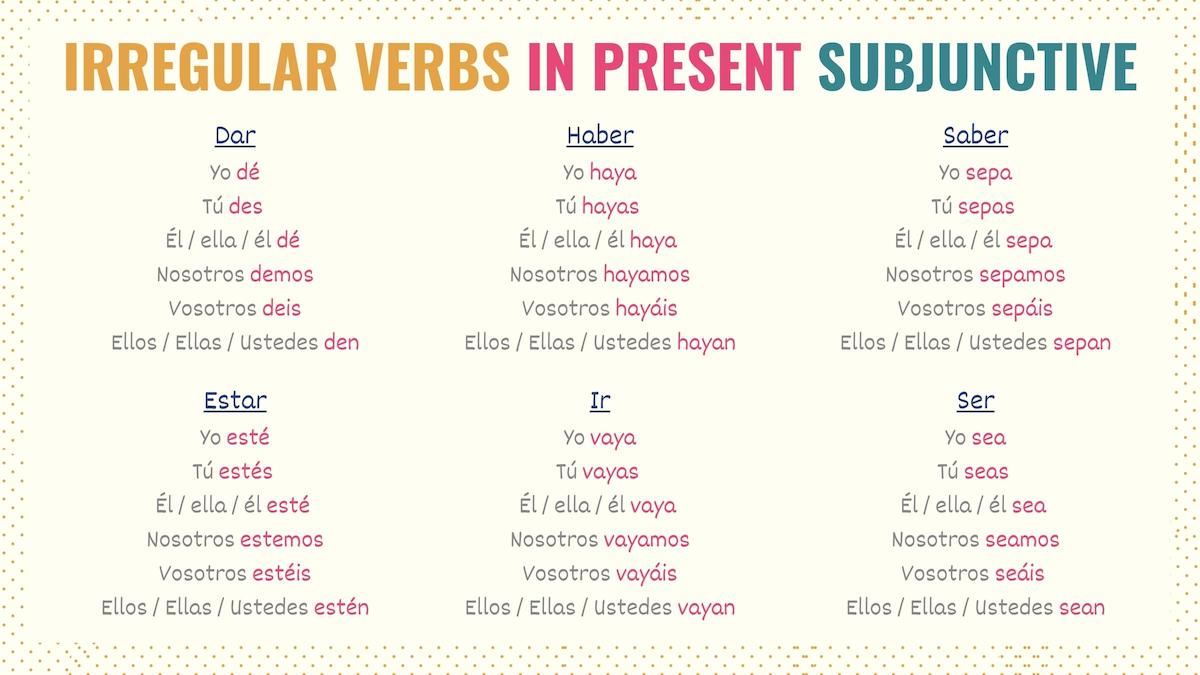
Present Subjunctive Spanish 101 Uses, Endings & Examples Tell Me In Spanish

Spanish Present Subjunctive Conjugation

Estar Subjunctive Conjugation Chart Examples Languata vrogue.co

How to Know Which Subjunctive Form to Use in Spanish
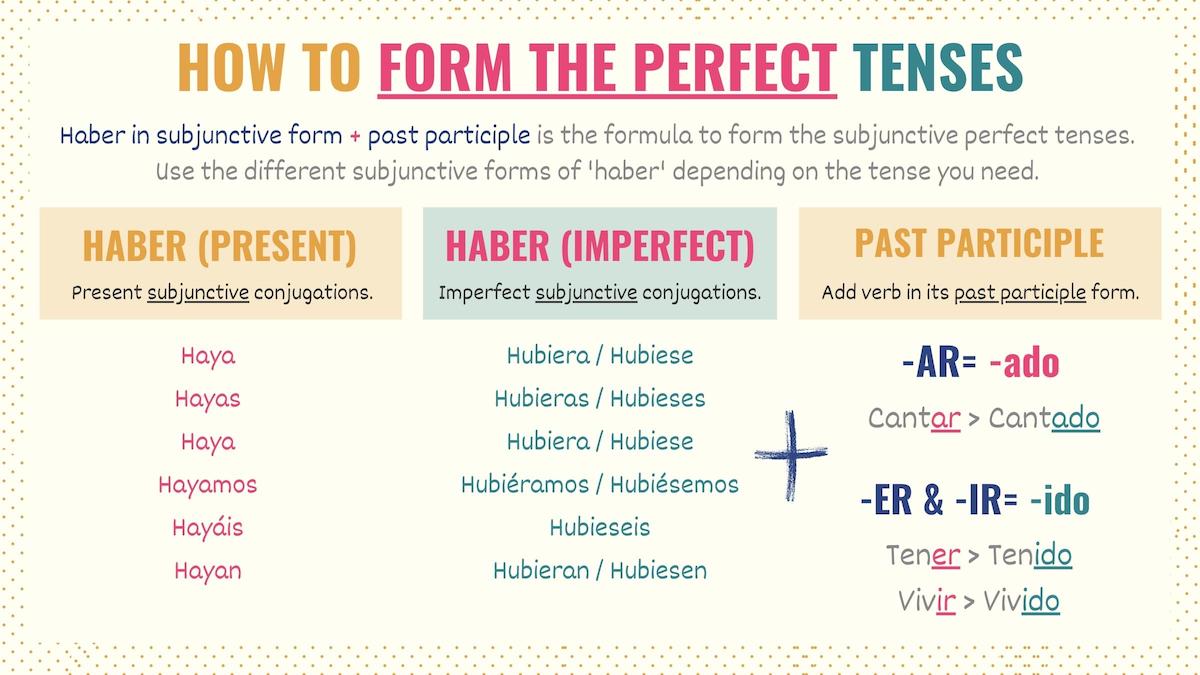
A Simple Guide to Master the Spanish Subjunctive Tell Me In Spanish
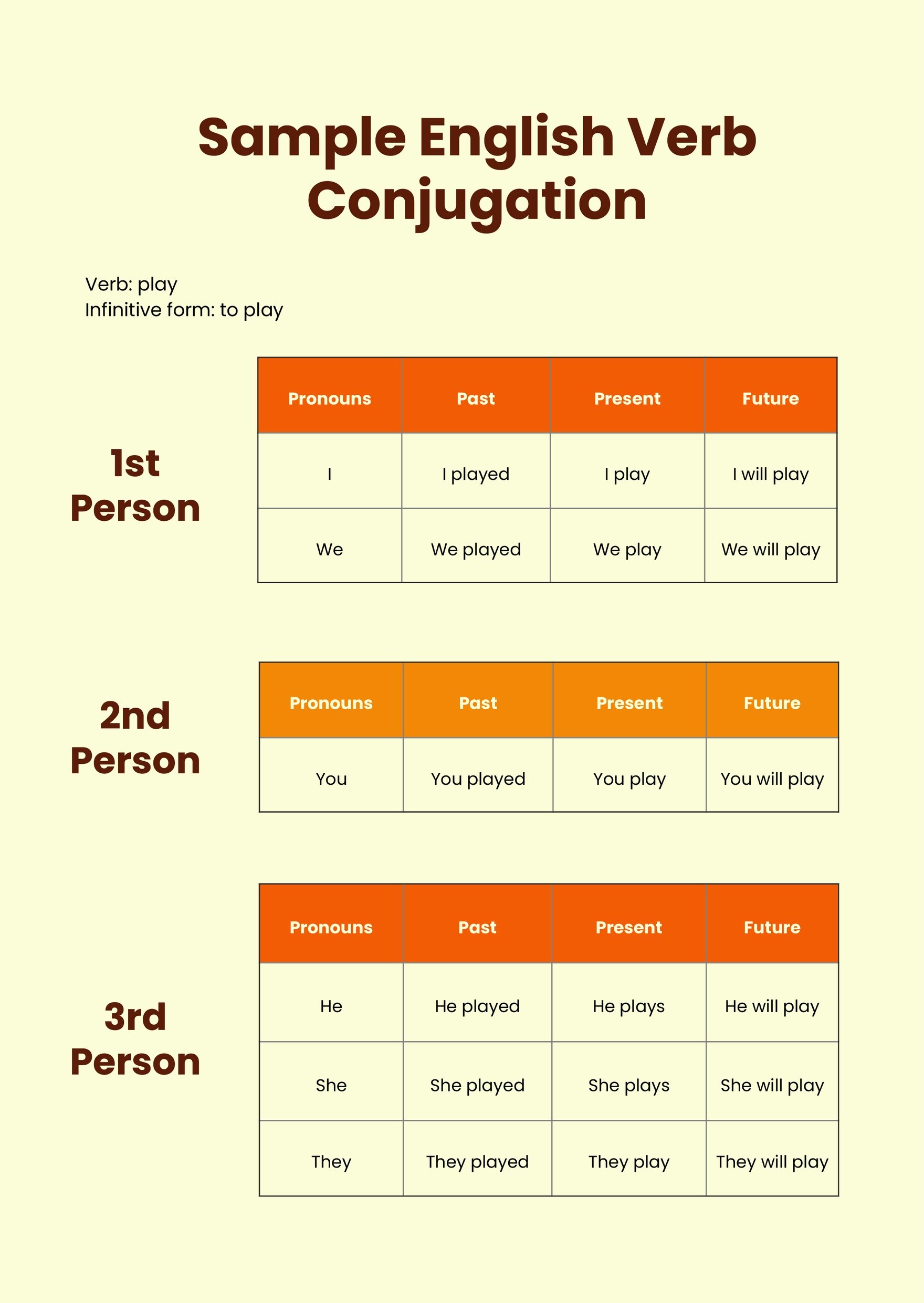
Spanish Verb Conjugation Chart Pdf
The Subjunctive Mood Is A Verb Form Used To Refer To A Hypothetical Scenario Or To Express A Wish, Suggestion, Or Command (E.g., “I Suggest You Be Quiet”).
The Subjunctive Mood Expresses Wishes, Proposals, Suggestions, Or Imagined Situations.
The Subjunctive Mood Is A Form Of A Verb Used To Express Statements That Are Imagined Or Contrary To The Fact (If I Were A Millionaire, I Would Buy My Parents A House).
The Subjunctive Is A Special Kind Of Verb Form In English.
Related Post: