
Ohms Conversion Chart
Ohms Conversion Chart - Ohm is an electrical unit of resistance. Where is resistance in ohms, is voltage in volts, and. Ω, the uppercase greek letter omega) is the unit of electrical resistance in the international system of units (si). Ohm’s law is the mathematical glue that binds voltage (v), current (i), and resistance (r) together. It is indicated by the symbol “ω” and is named after the german physicist georg simon ohm, who first. The ohm is the standard unit of electrical resistance in the international system of units (si). Here, r is measured in ohms (ω). Ohm's law is an empirical relation which accurately describes the conductivity of the vast majority of electrically conductive materials over many orders of magnitude of current. Ohm's law is a formula used to calculate the relationship between voltage, current and resistance in an electrical circuit. It's one of the derived units defined in the si standard, which means it's based. Where is resistance in ohms, is voltage in volts, and. The ohm is the standard unit of electrical resistance in the international system of units (si). Ohm’s law is the mathematical glue that binds voltage (v), current (i), and resistance (r) together. Ohm is a unit of electrical resistance, named after georg simon ohm, a german physicist who discovered ohm’s law, which states that the current flowing through a conductor between two. Ohm is the unit of electrical resistance in the international system of units (si). An ohm (referred to by the greek letter ω (omega)) is the si unit of resistance (r). It is equal to the resistance. Here, r is measured in ohms (ω). It can be defined by ohm's law and the equation: Ohmmeter is a measurement device that measures resistance. It can be defined by ohm's law and the equation: Where is resistance in ohms, is voltage in volts, and. Ohm's law is a formula used to calculate the relationship between voltage, current and resistance in an electrical circuit. Here, r is measured in ohms (ω). It is equal to the resistance. It is indicated by the symbol “ω” and is named after the german physicist georg simon ohm, who first. Ohm's law is a formula used to calculate the relationship between voltage, current and resistance in an electrical circuit. It's one of the derived units defined in the si standard, which means it's based. Here, r is measured in ohms (ω).. Ohm's law is an empirical relation which accurately describes the conductivity of the vast majority of electrically conductive materials over many orders of magnitude of current. Ohm is the unit of electrical resistance in the international system of units (si). Here, r is measured in ohms (ω). It is indicated by the symbol “ω” and is named after the german. It is indicated by the symbol “ω” and is named after the german physicist georg simon ohm, who first. It's one of the derived units defined in the si standard, which means it's based. Ohm's law is an empirical relation which accurately describes the conductivity of the vast majority of electrically conductive materials over many orders of magnitude of current.. It is equal to the resistance. Ohm’s law is the mathematical glue that binds voltage (v), current (i), and resistance (r) together. To students of electronics, ohm's law (e = ir) is as fundamentally. Ohm's law is a formula used to calculate the relationship between voltage, current and resistance in an electrical circuit. The ohm symbol is ω. To students of electronics, ohm's law (e = ir) is as fundamentally. The ohm symbol is ω. Ohm is the unit of electrical resistance in the international system of units (si). Ohmmeter is a measurement device that measures resistance. V = i × r. An ohm (referred to by the greek letter ω (omega)) is the si unit of resistance (r). Ohm is the unit of electrical resistance in the international system of units (si). Ohm's law is an empirical relation which accurately describes the conductivity of the vast majority of electrically conductive materials over many orders of magnitude of current. Ohm’s law is. It can be defined by ohm's law and the equation: V = i × r. Ohm is the unit of electrical resistance in the international system of units (si). It is indicated by the symbol “ω” and is named after the german physicist georg simon ohm, who first. To students of electronics, ohm's law (e = ir) is as fundamentally. Ohm's law is a formula used to calculate the relationship between voltage, current and resistance in an electrical circuit. Ohmmeter is a measurement device that measures resistance. It's one of the derived units defined in the si standard, which means it's based. Ohm is the unit of electrical resistance in the international system of units (si). Here, r is measured. Ohm's law is a formula used to calculate the relationship between voltage, current and resistance in an electrical circuit. Ohm is the unit of electrical resistance in the international system of units (si). It is indicated by the symbol “ω” and is named after the german physicist georg simon ohm, who first. V = i × r. Where is resistance. Here, r is measured in ohms (ω). Ohmmeter is a measurement device that measures resistance. Where is resistance in ohms, is voltage in volts, and. It can be defined by ohm's law and the equation: It's one of the derived units defined in the si standard, which means it's based. To students of electronics, ohm's law (e = ir) is as fundamentally. Ohm's law is an empirical relation which accurately describes the conductivity of the vast majority of electrically conductive materials over many orders of magnitude of current. Ohm is the unit of electrical resistance in the international system of units (si). It is equal to the resistance. It is indicated by the symbol “ω” and is named after the german physicist georg simon ohm, who first. An ohm (referred to by the greek letter ω (omega)) is the si unit of resistance (r). Ω, the uppercase greek letter omega) is the unit of electrical resistance in the international system of units (si). The ohm is the standard unit of electrical resistance in the international system of units (si). Ohm’s law is the mathematical glue that binds voltage (v), current (i), and resistance (r) together. The ohm symbol is ω.
Ohms Conversion Chart

ohms conversion chart Ohms conversion chart
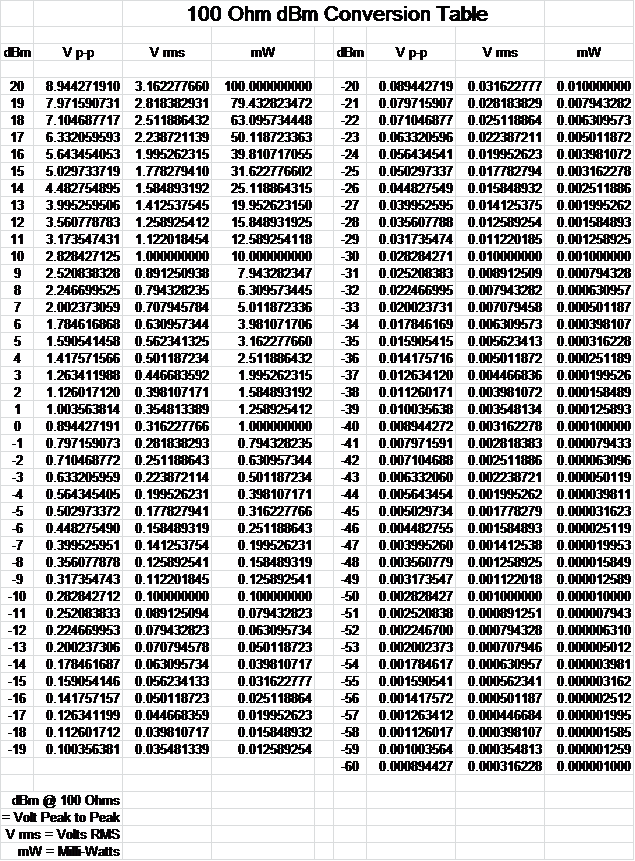
Ohms Conversion Chart
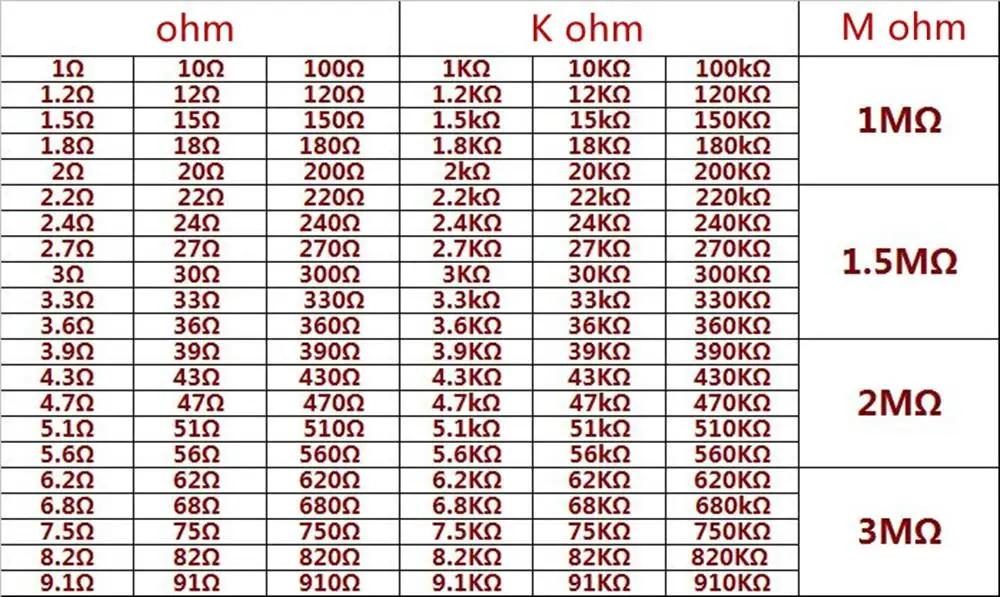
Ohms Conversion Chart
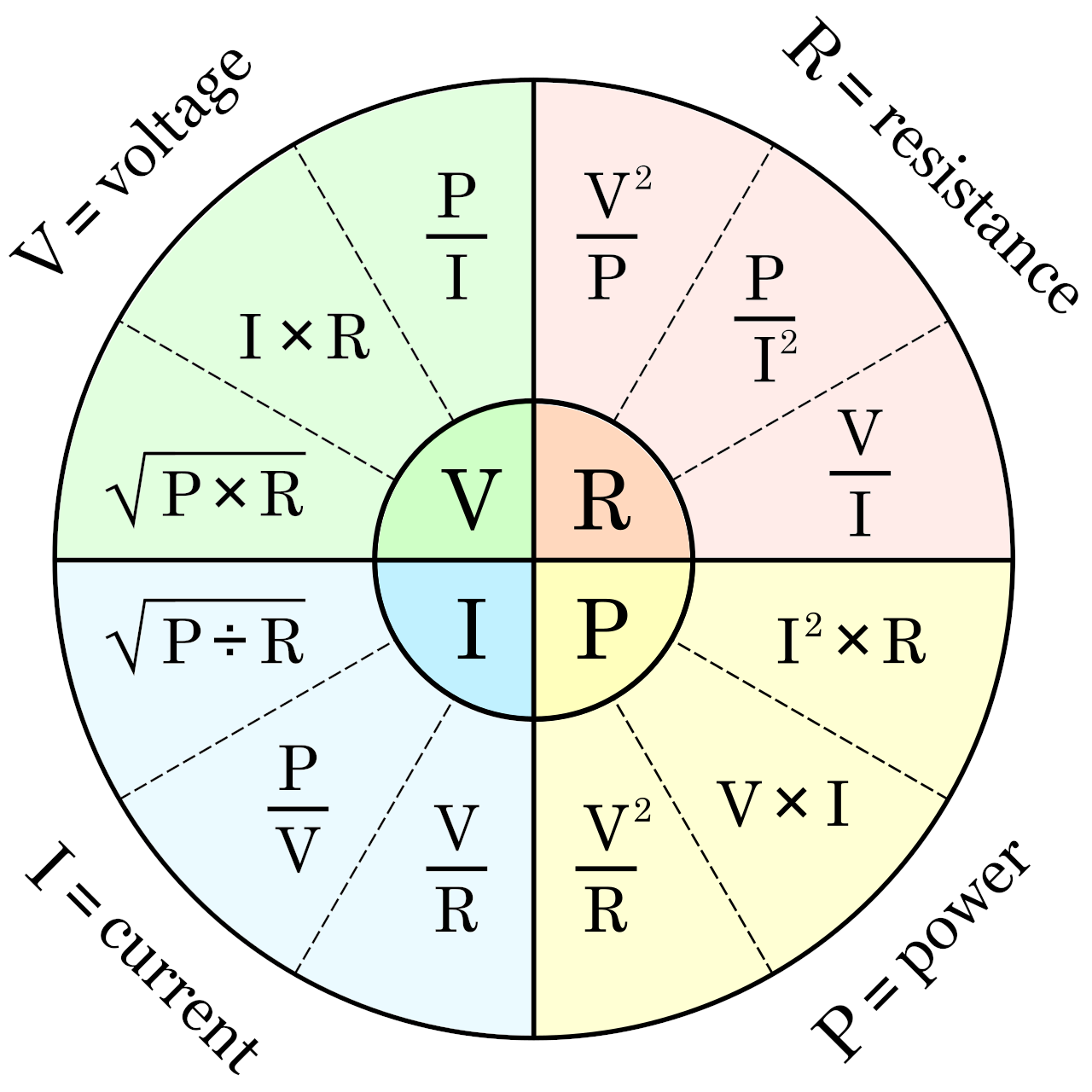
Electrical Ohm's Law Chart
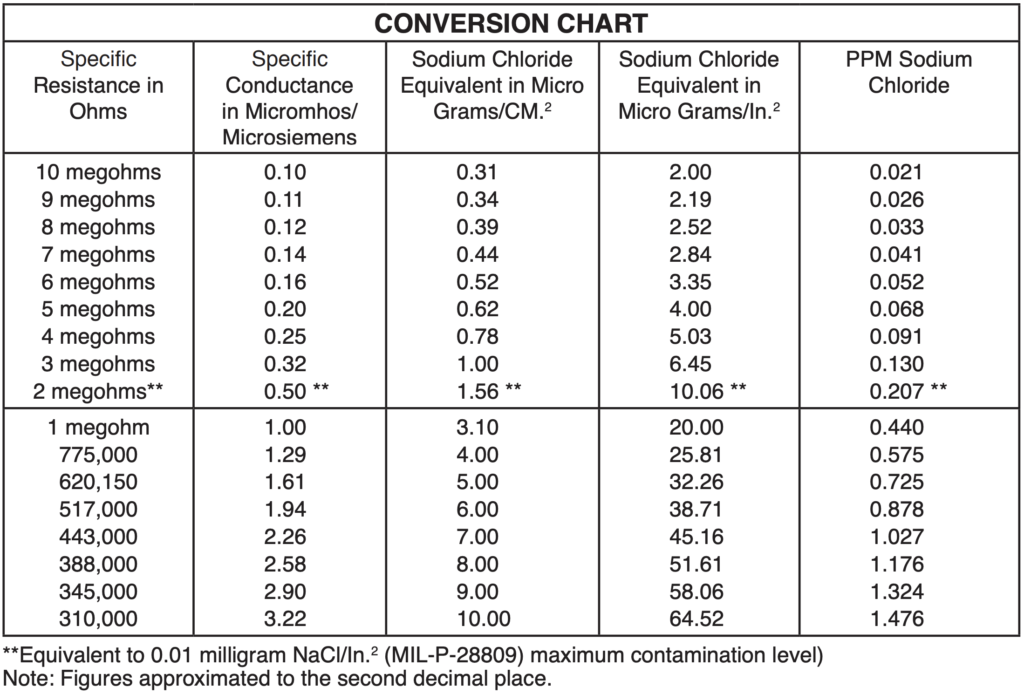
Ohms Conversion Chart
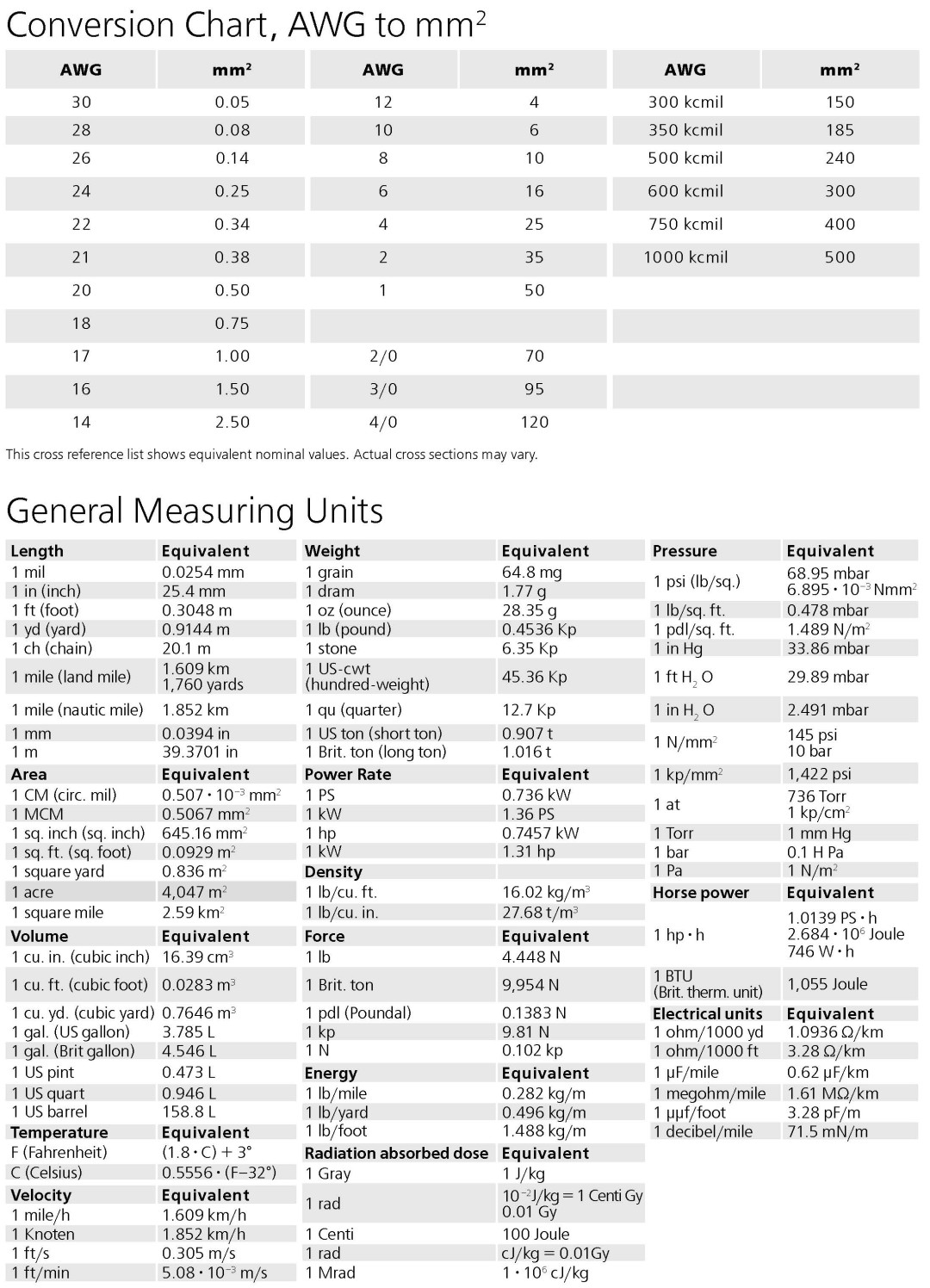
Ohms Conversion Chart

ohms conversion chart Ohms conversion chart

Ohms Conversion Chart

KiloOhm to Ohm (kΩ to Ω) conversion chart for resistance Measurement Most Frequently Used
Ohm Is A Unit Of Electrical Resistance, Named After Georg Simon Ohm, A German Physicist Who Discovered Ohm’s Law, Which States That The Current Flowing Through A Conductor Between Two.
Ohm Is An Electrical Unit Of Resistance.
V = I × R.
Ohm's Law Is A Formula Used To Calculate The Relationship Between Voltage, Current And Resistance In An Electrical Circuit.
Related Post: