
Inferences Anchor Chart
Inferences Anchor Chart - Inference or reasoning is that act of pure thought whereby one judgment is derived from another, or from two others. In any inference, we argue either to something already implied in. A conclusion or opinion that is formed because of known facts or evidence. Inferences are steps in logical reasoning, moving from premises to logical consequences; Inferences are an important part of reading comprehension. The meaning of inference is something that is inferred; Etymologically, the word infer means to carry forward. Inference is a cognitive process whereby we derive conclusions, assumptions, predictions, and explanations based on our interpretations of observable data. A guess that you make or an opinion that you form based on the information that you have: Inference (noun) inference / ˈ ɪnfərəns/ noun plural inferences britannica dictionary definition of inference 1 [noncount] : Etymologically, the word infer means to carry forward. Inference is a cognitive process whereby we derive conclusions, assumptions, predictions, and explanations based on our interpretations of observable data. Believe it or not, you’re exercising a key cognitive process known as inference — a mental process through which people draw conclusions based on evidence, reasoning, and. You might not realize how often you derive conclusions from indications in your everyday life. In any inference, we argue either to something already implied in. Have you ever wondered how we draw conclusions from what we see or hear? Understanding inference examples can unlock a deeper comprehension of everyday situations and texts. Inference (noun) inference / ˈ ɪnfərəns/ noun plural inferences britannica dictionary definition of inference 1 [noncount] : The meaning of inference is something that is inferred; Inferences are an important part of reading comprehension. Inference or reasoning is that act of pure thought whereby one judgment is derived from another, or from two others. In any inference, we argue either to something already implied in. You might not realize how often you derive conclusions from indications in your everyday life. An inference is the process of drawing a conclusion from supporting evidence. A guess. We draw inferences all the time. In any inference, we argue either to something already implied in. The meaning of inference is something that is inferred; It’s when you go beyond the evidence and reach some further conclusion. The act or process of reaching a conclusion. Etymologically, the word infer means to carry forward. It’s when you go beyond the evidence and reach some further conclusion. Inference or reasoning is that act of pure thought whereby one judgment is derived from another, or from two others. Understanding inference examples can unlock a deeper comprehension of everyday situations and texts. An inference is the process of drawing. Inference is a cognitive process whereby we derive conclusions, assumptions, predictions, and explanations based on our interpretations of observable data. Inferences are steps in logical reasoning, moving from premises to logical consequences; Inference (noun) inference / ˈ ɪnfərəns/ noun plural inferences britannica dictionary definition of inference 1 [noncount] : Inference or reasoning is that act of pure thought whereby one. A conclusion or opinion that is formed because of known facts or evidence. It’s when you go beyond the evidence and reach some further conclusion. Believe it or not, you’re exercising a key cognitive process known as inference — a mental process through which people draw conclusions based on evidence, reasoning, and. Inference is a cognitive process whereby we derive. An inference is the process of drawing a conclusion from supporting evidence. How to use inference in a sentence. Inference (noun) inference / ˈ ɪnfərəns/ noun plural inferences britannica dictionary definition of inference 1 [noncount] : It’s when you go beyond the evidence and reach some further conclusion. Inferences are steps in logical reasoning, moving from premises to logical consequences; In any inference, we argue either to something already implied in. Inferences are steps in logical reasoning, moving from premises to logical consequences; Have you ever wondered how we draw conclusions from what we see or hear? Inferences are an important part of reading comprehension. It’s when you go beyond the evidence and reach some further conclusion. Etymologically, the word infer means to carry forward. A conclusion or opinion that is formed because of known facts or evidence. A guess that you make or an opinion that you form based on the information that you have: Inferences are an important part of reading comprehension. Inference (noun) inference / ˈ ɪnfərəns/ noun plural inferences britannica dictionary definition of. It’s when you go beyond the evidence and reach some further conclusion. In any inference, we argue either to something already implied in. An inference is the process of drawing a conclusion from supporting evidence. A guess that you make or an opinion that you form based on the information that you have: Believe it or not, you’re exercising a. The act or process of reaching a conclusion. A guess that you make or an opinion that you form based on the information that you have: Inferences are steps in logical reasoning, moving from premises to logical consequences; A conclusion or opinion that is formed because of known facts or evidence. You might not realize how often you derive conclusions. How to use inference in a sentence. Inferences are an important part of reading comprehension. An inference is the process of drawing a conclusion from supporting evidence. Inferences are steps in logical reasoning, moving from premises to logical consequences; Understanding inference examples can unlock a deeper comprehension of everyday situations and texts. You might not realize how often you derive conclusions from indications in your everyday life. It’s when you go beyond the evidence and reach some further conclusion. We draw inferences all the time. A conclusion or opinion that is formed because of known facts or evidence. In any inference, we argue either to something already implied in. A guess that you make or an opinion that you form based on the information that you have: Inference (noun) inference / ˈ ɪnfərəns/ noun plural inferences britannica dictionary definition of inference 1 [noncount] : The act or process of reaching a conclusion. Etymologically, the word infer means to carry forward. The meaning of inference is something that is inferred;
Making inferences anchor chart for reading/ELA. Inference anchor chart, Anchor charts, Anchor

Inference anchor chart. Clues from the text + what I already know = INFERENCE. Reading

Inferences Anchor Chart) Middle school anchor charts, Reading anchor charts, Intermediate reading

Making Inferences Inference anchor chart, Kindergarten anchor charts, Inferencing anchor chart
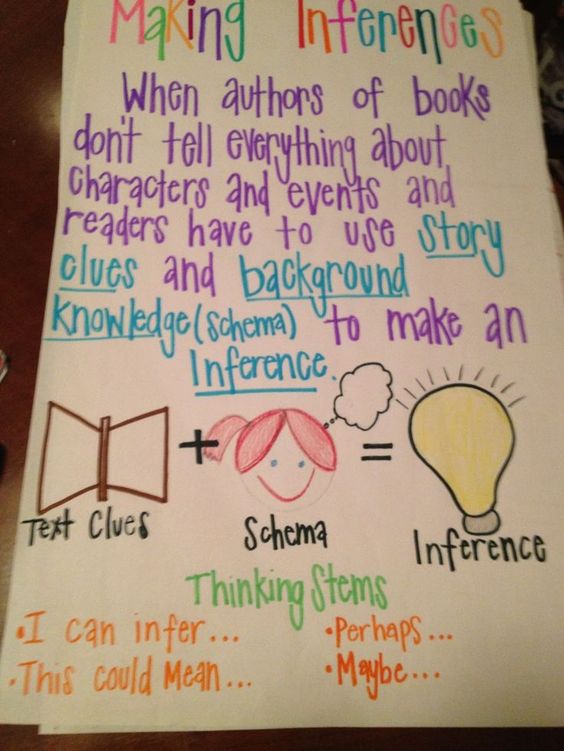
10 Anchor Charts to Teach Inferring — THE CLASSROOM NOOK
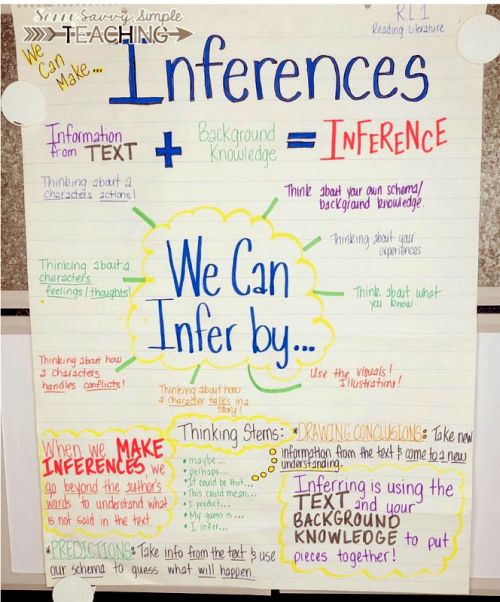
15 Terrific Inferences Anchor Charts for the Classroom We Are Teachers
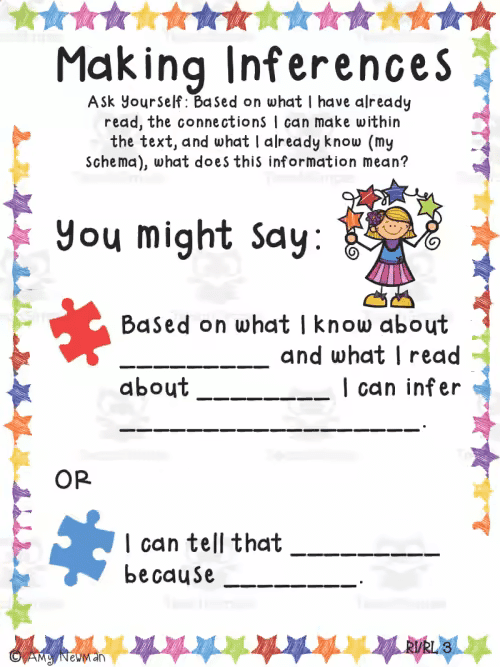
19 Fantastic Inferencing Anchor Chart The Teach Simple Blog

Inferences {Anchor Chart} Amy Groesbeck Inference anchor chart, Classroom anchor charts

Making Inferences anchor chart...or page for interactive notebooks! Teaching Language Arts

Making Inferences Anchor Chart by Teach Simple
Believe It Or Not, You’re Exercising A Key Cognitive Process Known As Inference — A Mental Process Through Which People Draw Conclusions Based On Evidence, Reasoning, And.
Have You Ever Wondered How We Draw Conclusions From What We See Or Hear?
Inference Or Reasoning Is That Act Of Pure Thought Whereby One Judgment Is Derived From Another, Or From Two Others.
Inference Is A Cognitive Process Whereby We Derive Conclusions, Assumptions, Predictions, And Explanations Based On Our Interpretations Of Observable Data.
Related Post: